
· Faro, Portugal
Gene therapy for Cockayne syndrome type B moves into mouse experiments
Dr. Clévio Nóbrega's team completed the first steps of the project and began experiments in mouse models of the disease — the stage at which a gene therapy either shows it can work or has to be redesigned.

In March 2024 the association reported that the development of a gene therapy for Cockayne syndrome type B was “already underway at full steam”: the first steps were done, and experiments in mouse models of the disease had begun.
The work is carried out by two teams the association collaborates with and funds: one led by Dr. Clévio Nóbrega at the Algarve Biomedical Center Research Institute in Portugal, the other at the University of Minnesota Medical School in the United States, led by Dr. Christina Pacak.
Why mouse experiments are the milestone that counts
A gene therapy has to do three things: reach the right cells, deliver a working copy of the gene, and get those cells to make the missing protein — safely. Cells in a dish can show the first signs of this. Only a living animal with the same genetic fault can show whether it holds up in a whole body over time.
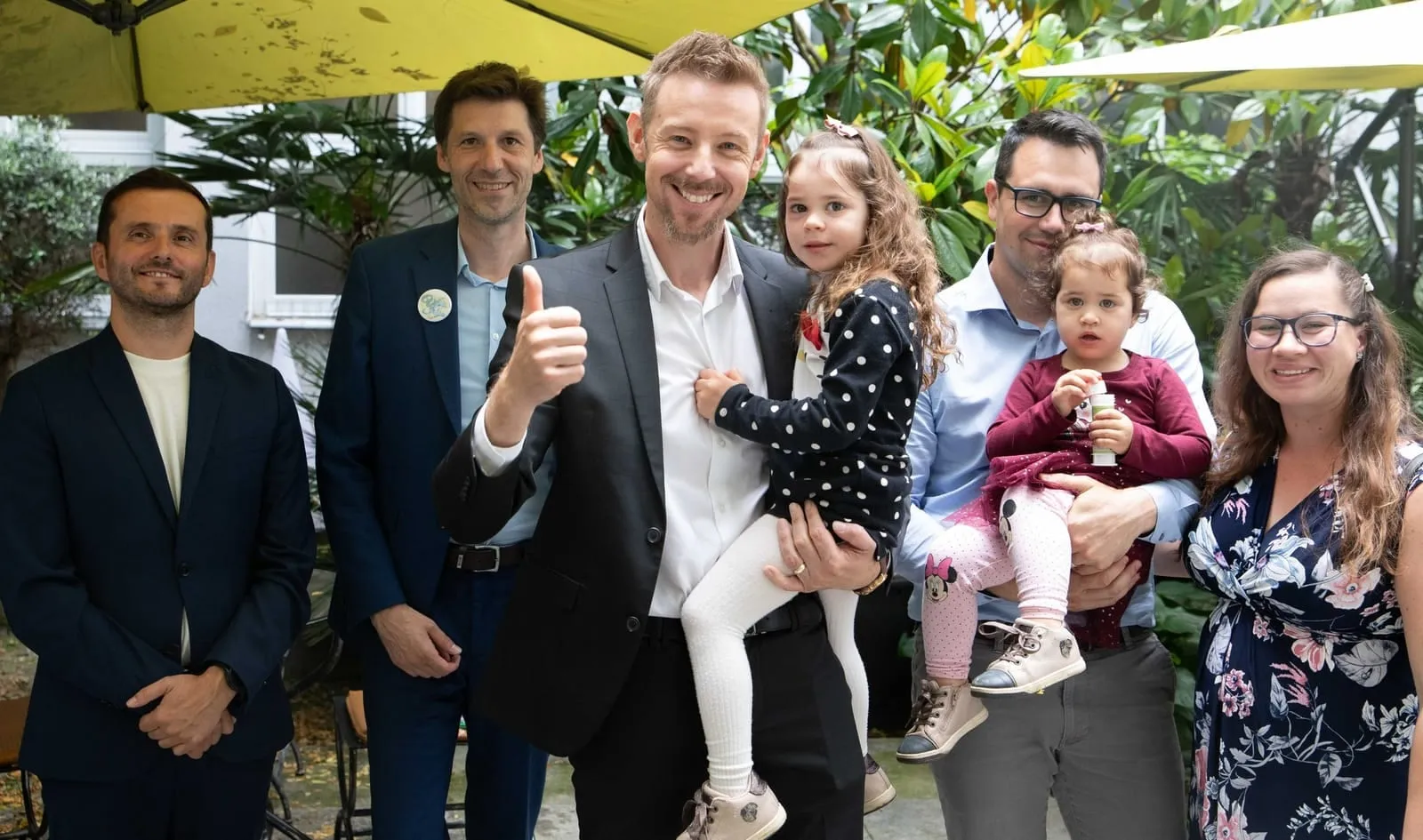
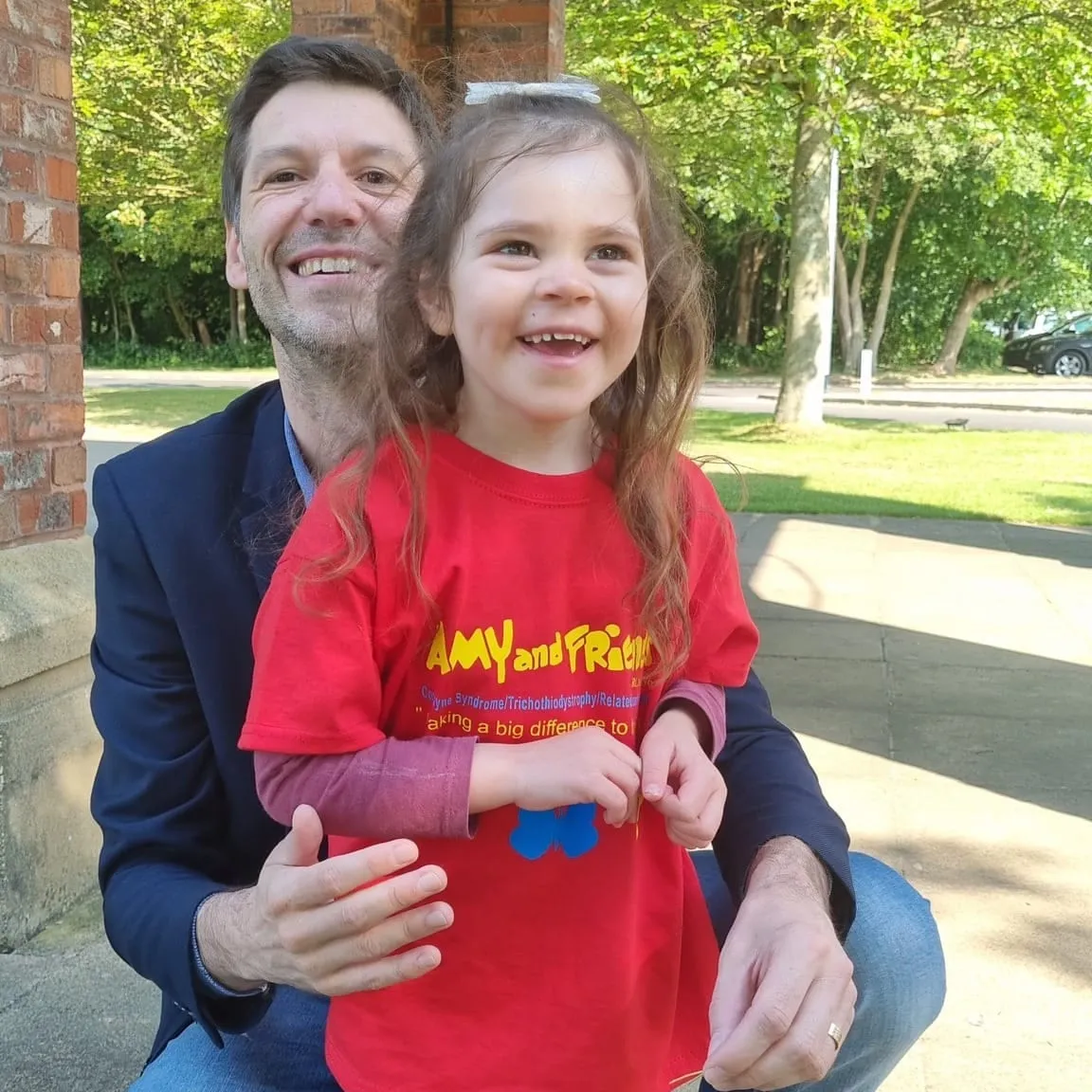
Dr. Nóbrega had already shown the principle in the laboratory. When he came to Ljubljana in June 2023 to meet Karolina and present the progress, his team had delivered a healthy copy of the gene into mouse brain cells and those cells had begun producing the protein that Karolina’s cells cannot make.
Moving to mouse models of the disease itself is the next step: the therapy is given to animals that carry the same fault, and the researchers follow what happens.
Where the fundraising stood
At the time of the announcement, more than €1.3 million of the €2 million needed for the preclinical phase had been raised in Slovenia. The campaign reached its goal a year later, in March 2025, with a final total of €2,102,197.
You can read what the research involves today, and why the ERCC6 gene is such a difficult target, on our gene therapy research page — and what the condition itself does in our guide to Cockayne syndrome.
Published by Viljem Julijan Association for Children with Rare Diseases. Photo: archive of the association.